
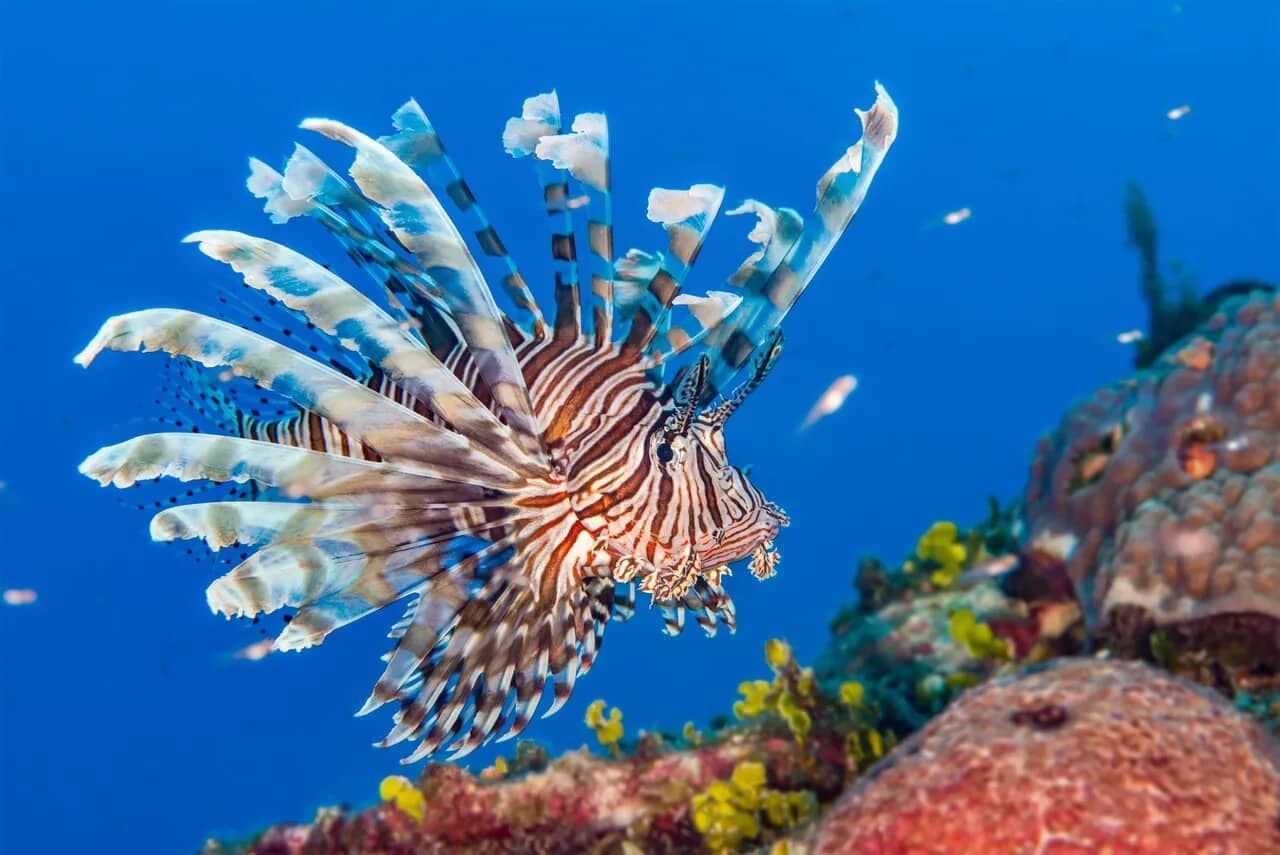
Beneath the surface of Barbados’ warm turquoise waters swims one of the Caribbean’s most striking (and most destructive) marine invaders: the lionfish. With flowing fins, zebra-like stripes, and an almost regal appearance, the lionfish is as beautiful as it is deadly to our reefs.
Originally from the Indo-Pacific, lionfish were introduced to the Atlantic by accident and have since spread throughout the Caribbean. With no natural predators in this region and a voracious appetite, lionfish consume vast amounts of native juvenile fish, posing a serious threat to coral reef health and local fish populations.
But here’s where the story takes a delicious turn: lionfish are entirely edible, and their white, flaky meat is incredibly tasty. Once the venomous spines are carefully removed (don’t worry – local fishers are trained), the meat is safe and can be used in everything from grilled fillets to ceviche and fish cakes.
More and more chefs in Barbados are embracing lionfish as a sustainable seafood option. Eating lionfish helps protect local reefs and supports the livelihoods of small-scale fishers who have started targeting this invasive species.
You might find lionfish at eco-conscious restaurants or beachside fish shacks, just ask your server what’s fresh. And if you’re heading out on a snorkelling or diving excursion, some operators offer lionfish hunting experiences followed by a cook-up on the beach.
So yes – it’s stunning. Yes – it’s invasive. And yes – it’s delicious. Do your part for the reefs: eat more lionfish!